The Major Arcana
-
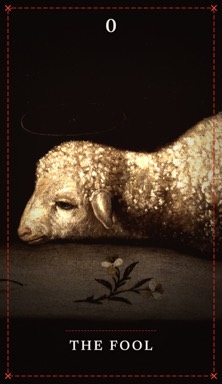 The FoolThe Sacrificial LambJosefa de Óbidos, c. 1670–84Walters Art Museum, BaltimorePublic domain · Wikimedia Commons
-
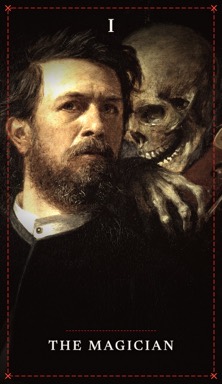 The MagicianSelf-Portrait with Death Playing the FiddleArnold Böcklin, 1872Alte Nationalgalerie, BerlinPublic domain · Wikimedia Commons
-
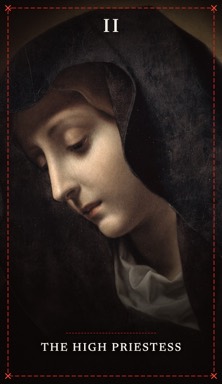 The High PriestessMadonnaCarlo Dolci, c. 1650Statens Museum for Kunst, CopenhagenPublic domain · Wikimedia CommonsIn place of Dolci's Blue Madonna, which has no open image.
-
-
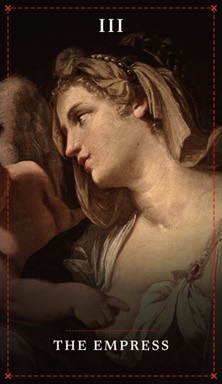
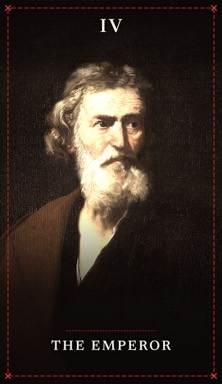 The EmperorSaint MatthewJusepe de Ribera, 1632Kimbell Art Museum, Fort WorthPublic domain · Wikimedia Commons
-
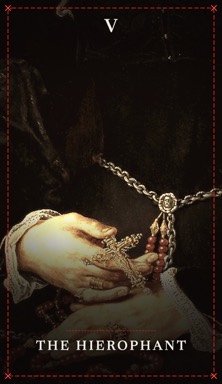 The HierophantPortrait of the Nun Hillegond GerritsdrMaerten van Heemskerck, c. 1530Hofje van Codde en van Beresteyn, HaarlemPublic domain · Wikimedia Commons
-
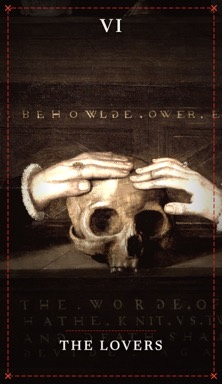 The LoversThe Judde MemorialBritish School, c. 1560Dulwich Picture Gallery, LondonPublic domain · Wikimedia Commons
-
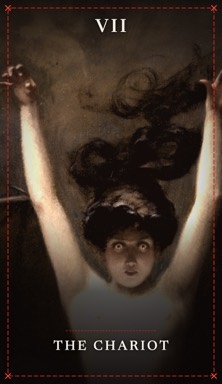
-
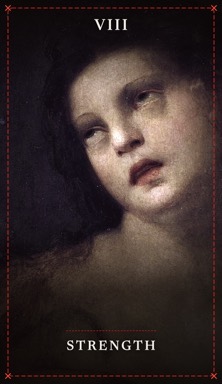 StrengthCleopatraDomenico Puligo and studio, early 16th centuryPrivate collectionPublic domain · Wikimedia Commons
-
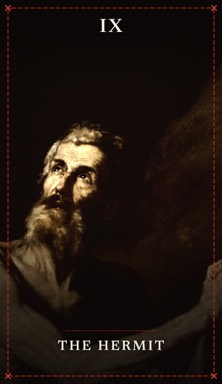 The HermitSaint Paul the HermitJusepe de Ribera, c. 1638Walters Art Museum, BaltimorePublic domain · Wikimedia Commons
-
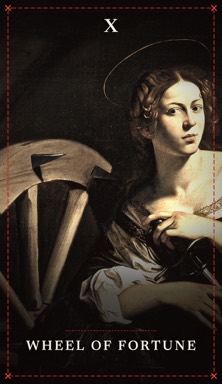 Wheel of FortuneSaint Catherine of AlexandriaCaravaggio, c. 1598Museo Nacional Thyssen-Bornemisza, MadridPublic domain · Wikimedia Commons
-
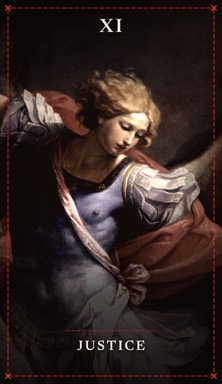 JusticeSaint Michael Defeating SatanGuido Reni, c. 1630–35Santa Maria della Concezione dei Cappuccini, RomePublic domain · Wikimedia CommonsIn place of a Saint Michael given to Francesco del Cossa, which could not be traced.
-
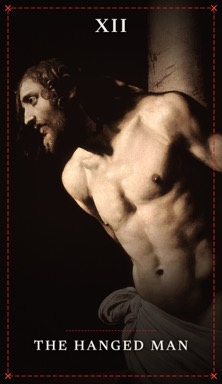 The Hanged ManChrist at the ColumnCaravaggio, c. 1607Musée des Beaux-Arts, RouenPublic domain · Wikimedia Commons
-
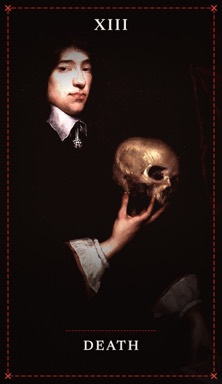 DeathSir William PettyIsaac Fuller, c. 1651National Portrait Gallery, LondonPublic domain · Wikimedia Commons
-
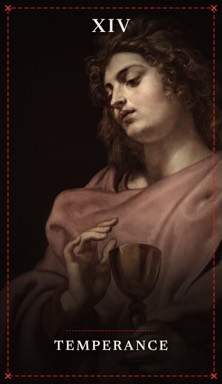
-
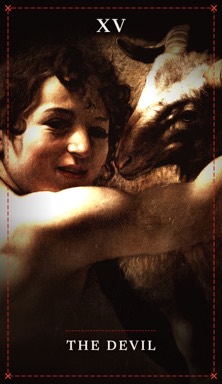 The DevilSaint John the Baptist (Youth with a Ram)Caravaggio, c. 1602Public domain · Wikimedia Commons
-
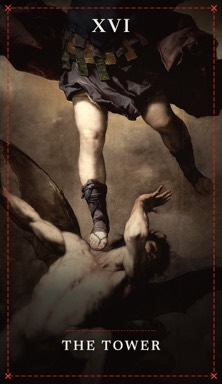 The TowerThe Fall of the Rebel AngelsLuca Giordano, c. 1666Kunsthistorisches Museum, ViennaPublic domain · Wikimedia Commons
-
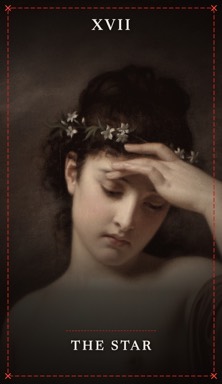 The StarHebe after the FallHugues Merle, 1880Private collectionPublic domain · Wikimedia Commons
-
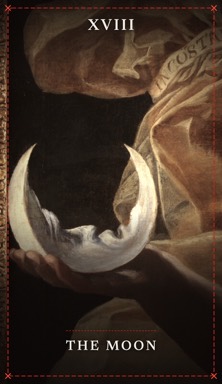 The MoonIncostanza: An Allegory of FicklenessAttributed to Abraham Janssens I, c. 1615–18Statens Museum for Kunst, Copenhagen
-
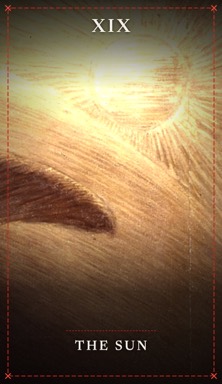 The SunDay Awakens the NightGaetano Previati, c. 1905Museo Revoltella, TriestePublic domain · Wikimedia Commons
-
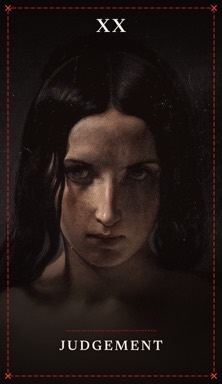 JudgementLa MeditazioneFrancesco Hayez, 1851Galleria d’arte moderna Achille Forti, VeronaPublic domain · Wikimedia Commons
-
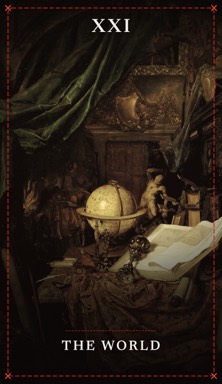 The WorldStill Life with Globe, Books, Sculpture and Other ObjectsJan van der Heyden, c. 1670Academy of Fine Arts, ViennaPublic domain · Wikimedia Commons


Wands
-
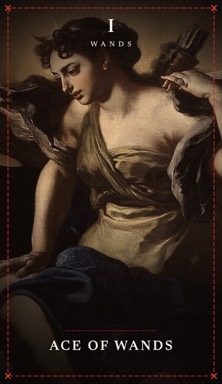 Ace of WandsDiana and EndymionFrancesco Solimena, 1705–10Walker Art Gallery, LiverpoolPublic domain · Wikimedia Commons
-
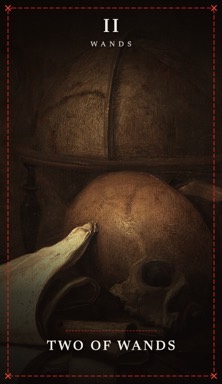 Two of WandsVanitas Still LifePieter Symonsz Potter, 1646Rijksmuseum, Amsterdam
-
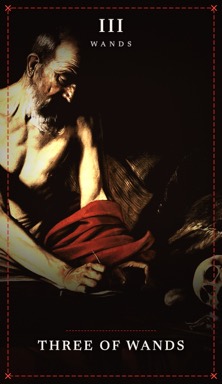 Three of WandsSaint Jerome WritingCaravaggio, c. 1607–08St John's Co-Cathedral, VallettaPublic domain · Wikimedia Commons
-
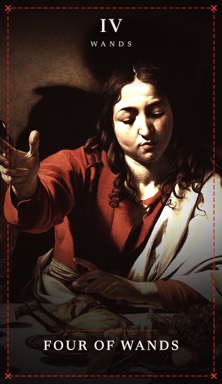 Four of WandsSupper at EmmausCaravaggio, 1601National Gallery, LondonPublic domain · Wikimedia Commons
-
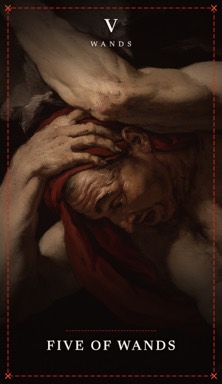 Five of WandsSisyphusAntonio Zanchi, c. 1660–65Mauritshuis, The HaguePublic domain · Wikimedia CommonsIn place of Zanchi's Hercules and Cacus, which could not be found.
-
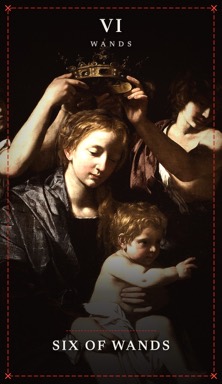 Six of WandsThe Holy Family with Saint CatherineBartolomeo Cavarozzi, c. 1617–19Museo del Prado, MadridPublic domain · Wikimedia Commons
-
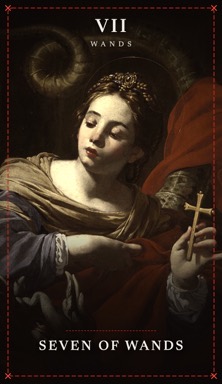 Seven of WandsSaint MargaretSchool of Simon Vouet, c. 1620Wadsworth Atheneum Museum of Art, HartfordPublic domain · Wikimedia Commons
-
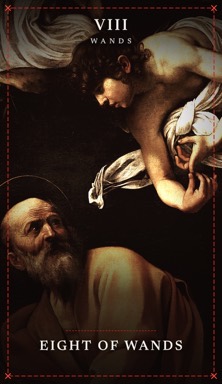 Eight of WandsThe Inspiration of Saint MatthewCaravaggio, 1602San Luigi dei Francesi, RomePublic domain · Wikimedia Commons
-
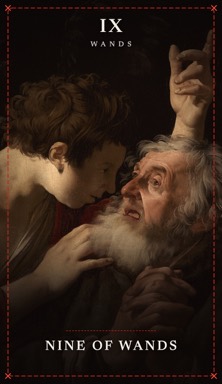 Nine of WandsThe Liberation of Saint PeterHendrick ter Brugghen, 1624Mauritshuis, The HaguePublic domain · Wikimedia Commons
-
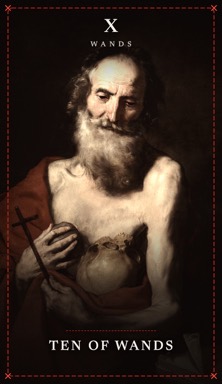 Ten of WandsSaint JeromeJusepe de Ribera, 1638Cleveland Museum of ArtIn place of Ribera's Saint Jerome of 1628–30, which has no open image.
-
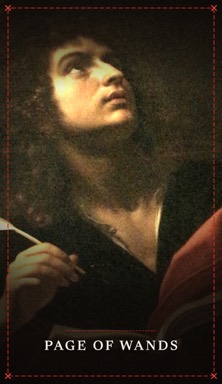 Page of WandsSaint John the EvangelistCarlo Dolci, c. 1671Galleria Palatina, Palazzo Pitti, FlorencePhoto: Francesco Bini, CC BY-SA 4.0 · Wikimedia CommonsIn place of Dolci's Saint John the Evangelist dated 1675; this may be the same painting.
-
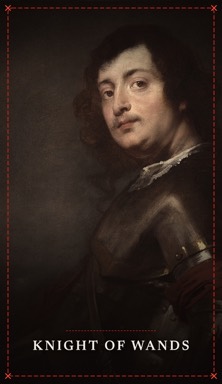 Knight of WandsThe Prefect Raffaele RaggiAnthony van Dyck, c. 1625National Gallery of Art, Washington
-
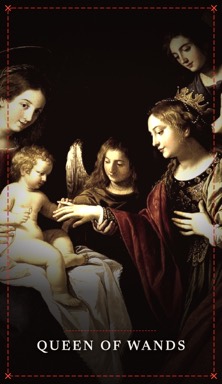 Queen of WandsThe Mystic Marriage of Saint CatherineBartolomeo Cavarozzi, early 17th centuryReal Academia de Bellas Artes de San Fernando, MadridPublic domain · Wikimedia CommonsIn place of Cavarozzi's Saint Catherine of 1618, which could not be found separately.
-
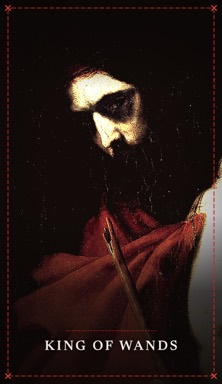 King of WandsEcce HomoJusepe de Ribera, c. 1620Real Academia de Bellas Artes de San Fernando, MadridPublic domain · Wikimedia Commons


Cups
-
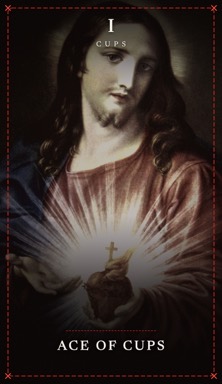 Ace of CupsThe Sacred Heart of JesusPompeo Batoni, 1767Il Gesù, RomeIn place of the Lacrimosa pairing, a painting by a living artist.
-
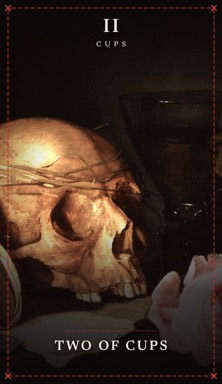 Two of CupsA Vanitas Still Life with a Skull, a Book and RosesJan Davidsz. de Heem, c. 1630Nationalmuseum, StockholmPublic domain · Wikimedia Commons
-
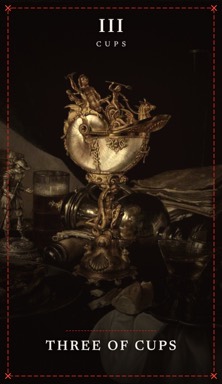 Three of CupsStill Life with a Nautilus CupAttributed to Gerrit Willemsz. Heda, c. 1643–47National Gallery, LondonPublic domain · Wikimedia Commons
-
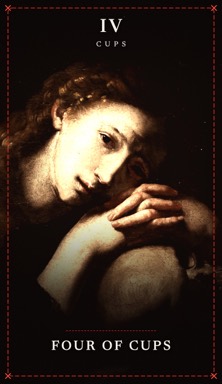 Four of CupsMagdalen Meditating on a SkullJusepe de Ribera, c. 1630Museo Nazionale d'Abruzzo, L'AquilaPhoto: Sailko, CC BY 3.0 · Wikimedia Commons
-
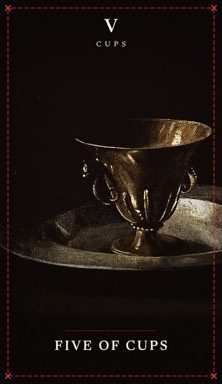 Five of CupsStill Life with Four VesselsFrancisco de Zurbarán, c. 1650Museo del Prado, MadridPublic domain · Wikimedia Commons
-
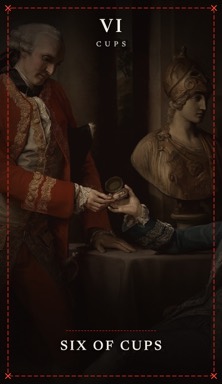 Six of CupsSir Sampson Gideon and an Unidentified CompanionPompeo Batoni, 1767National Gallery of Victoria, MelbournePublic domain · Wikimedia Commons
-
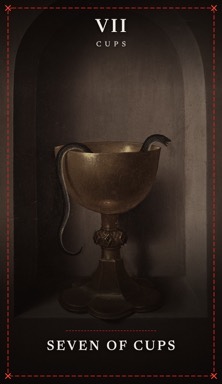 Seven of CupsChalice of Saint John the EvangelistHans Memling, c. 1470–75National Gallery of Art, Washington
-
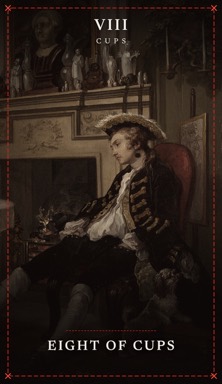 Eight of CupsMarriage A-la-Mode 2: The Tête à TêteWilliam Hogarth, c. 1743National Gallery, LondonPublic domain · Wikimedia Commons
-
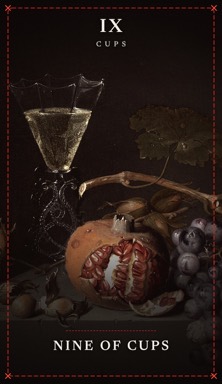 Nine of CupsStill Life with FruitJacob van Walscapelle, 1675National Gallery of Art, Washington
-
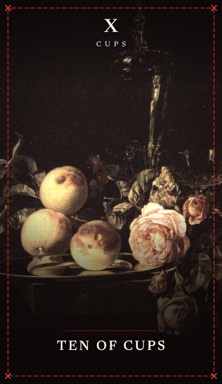 Ten of CupsRoses and PeachesWillem van Aelst, 1659Pushkin Museum, MoscowPublic domain · Wikimedia Commons
-
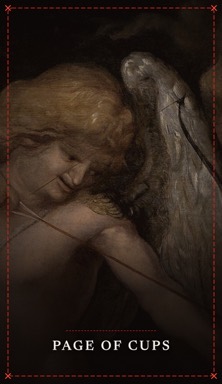 Page of CupsVenus and CupidJacob de Gheyn II, c. 1605–10Rijksmuseum, AmsterdamPublic domain · Wikimedia Commons
-
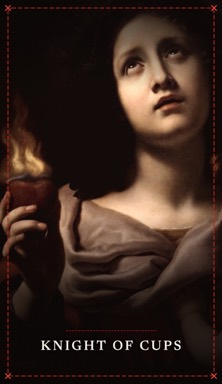 Knight of CupsCharity (La Carità)Carlo Dolci, 1659Photo: Sailko, CC BY-SA 4.0 · Wikimedia Commons
-
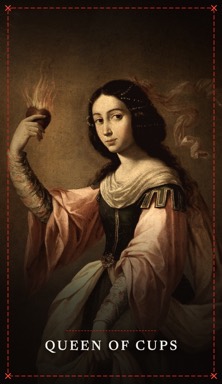 Queen of CupsAllegory of CharityFrancisco de Zurbarán, c. 1655Museo del Prado, MadridPhoto: Museo Nacional del Prado, CC BY-SA 4.0 · Wikimedia Commons
-
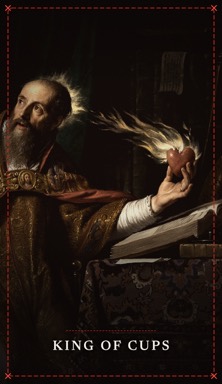 King of CupsSaint AugustinePhilippe de Champaigne, c. 1645–50Los Angeles County Museum of ArtPublic domain · Wikimedia Commons


Swords
-
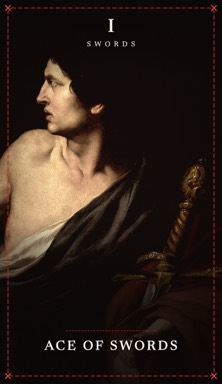 Ace of SwordsDavid with the Head of GoliathPietro Novelli, c. 1630J. Paul Getty Museum, Los AngelesPublic domain · Wikimedia Commons
-
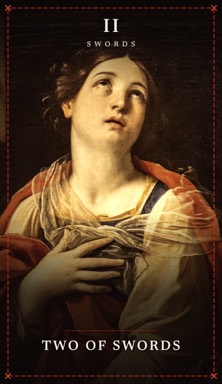 Two of SwordsSaint Margaret of AntiochGuido Reni, c. 1606–07LWL-Museum für Kunst und Kultur, MünsterPhoto: Wuselig, CC0 1.0 · Wikimedia Commons
-
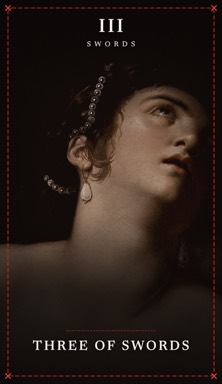 Three of SwordsLucretiaArtemisia Gentileschi, c. 1627J. Paul Getty Museum, Los AngelesPublic domain · Wikimedia Commons
-
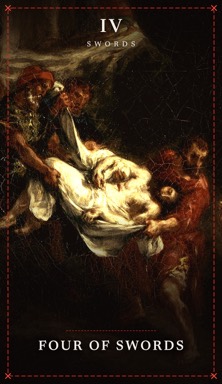 Four of SwordsChrist Carried Down to the TombEugène Delacroix, 1859National Museum of Western Art, TokyoPublic domain · Wikimedia CommonsIn place of The Vampire, given to Delacroix, which could not be traced.
-
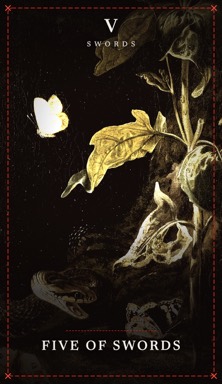 Five of SwordsSerpent and Butterflies in the WoodsOtto Marseus van Schrieck, 1670sNationalmuseum, StockholmPublic domain · Wikimedia Commons
-
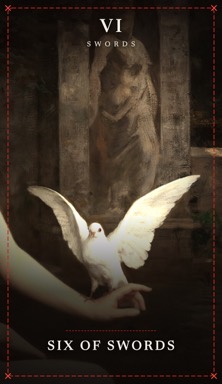 Six of SwordsAt the Fountain (Am Brunnen)Albert Ritzberger, 1895Private collectionPublic domain · Artvee
-
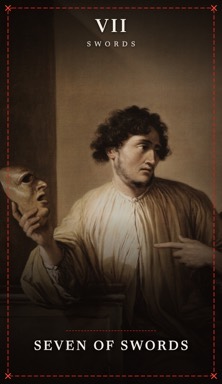 Seven of SwordsLa Menzogna (The Lie)Salvator Rosa, c. 1645–48Galleria Palatina, Palazzo Pitti, FlorencePublic domain · Wikimedia Commons
-
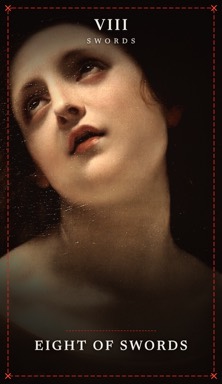
-
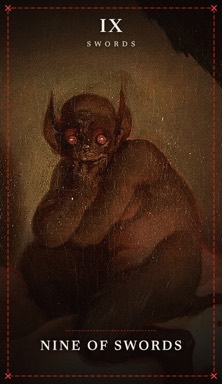
-
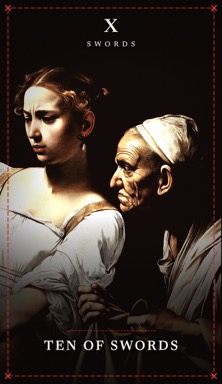 Ten of SwordsJudith Beheading HolofernesCaravaggio, c. 1598–99Gallerie Nazionali di Arte Antica, Palazzo Barberini, RomePublic domain · Wikimedia Commons
-
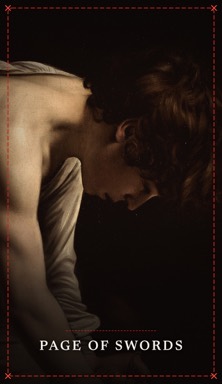 Page of SwordsDavid with the Head of GoliathCaravaggio, c. 1600Museo del Prado, MadridPublic domain · Wikimedia Commons
-
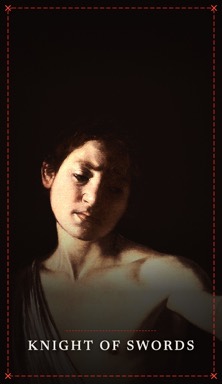 Knight of SwordsDavid with the Head of GoliathCaravaggio, c. 1609–10Galleria Borghese, RomePublic domain · Wikimedia Commons
-
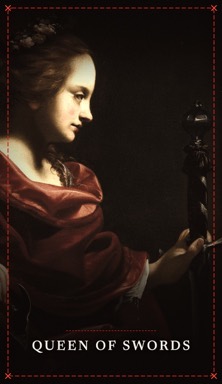 Queen of SwordsSaint Catherine of AlexandriaWorkshop of Simon Vouet, 17th centuryPrivate collectionPublic domain · Wikimedia Commons
-
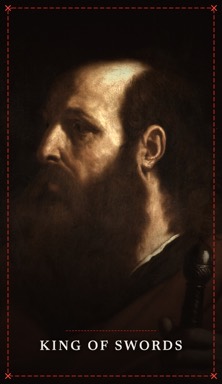


Pentacles
-
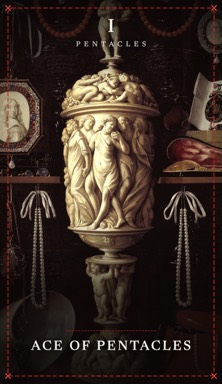 Ace of PentaclesCabinet of Curiosities with an Ivory GobletGeorg Hainz, 17th centuryStatens Museum for Kunst, CopenhagenPublic domain · Wikimedia CommonsIn place of Hainz's Still Life with an Ivory Cup (Munich), which has no colour image.
-
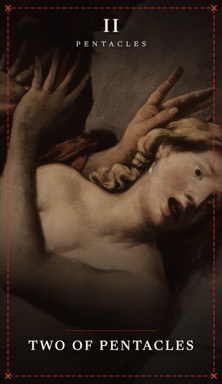 Two of PentaclesJupiter and SemelePietro della Vecchia, 17th centuryPrivate collectionPublic domain · Wikimedia CommonsIn place of a Semele by an Italian painter of the 1600s, which has no record.
-
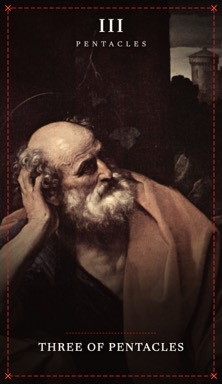 Three of PentaclesSaint Paul Rebuking Saint PeterGuido Reni, c. 1603–04Pinacoteca di Brera, MilanPublic domain · Wikimedia Commons
-
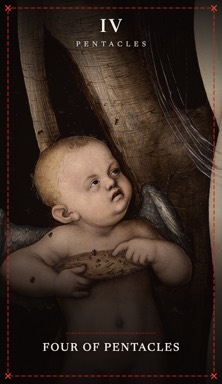 Four of PentaclesVenus and Cupid the Honey ThiefLucas Cranach the Elder, c. 1531Galleria Borghese, RomePublic domain · Wikimedia Commons
-
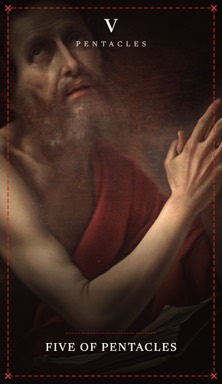 Five of PentaclesSaint Jerome in PrayerCarlo Dolci, 1655Photo: Sailko, Public domain · Wikimedia Commons
-
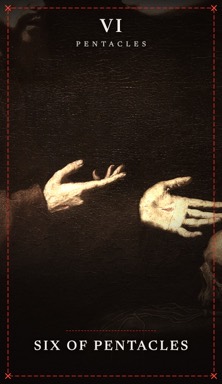 Six of PentaclesThe Vision of Saint Francis of AssisiJusepe de RiberaMuseo del Prado, MadridPublic domain · Wikimedia Commons
-
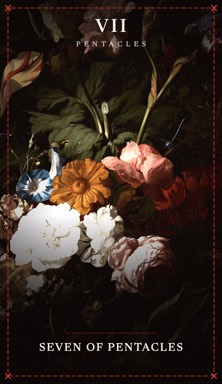 Seven of PentaclesVase with FlowersRachel Ruysch, 1700Mauritshuis, The HaguePublic domain · Wikimedia Commons
-
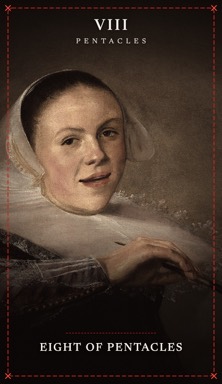 Eight of PentaclesSelf-PortraitJudith Leyster, c. 1630National Gallery of Art, WashingtonIn place of a self-portrait given to Charles Sellier, whose dates do not fit.
-
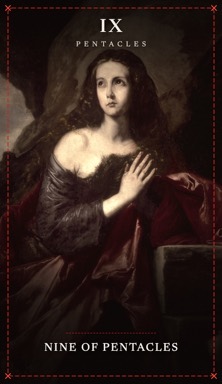 Nine of PentaclesPenitent MagdaleneJusepe de Ribera, 1641Museo del Prado, MadridPublic domain · Wikimedia CommonsIn place of a Magdalene with the Eucharistic Chalice by a follower of Ribera, which has no record.
-
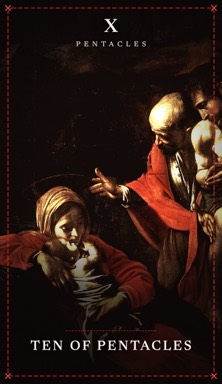 Ten of PentaclesAdoration of the ShepherdsCaravaggio, 1609Museo Regionale, MessinaPublic domain · Wikimedia Commons
-
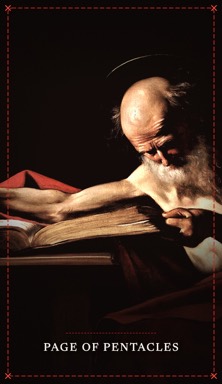 Page of PentaclesSaint Jerome WritingCaravaggio, 1605–06Galleria Borghese, RomePublic domain · Wikimedia Commons
-
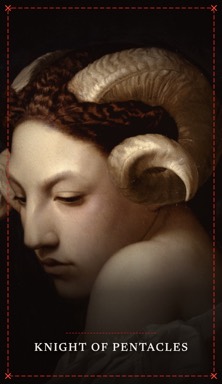 Knight of PentaclesHead of a Woman with Ram's HornsJean-Léon Gérôme, 1853Musée d'arts de NantesPublic domain · Wikimedia Commons
-
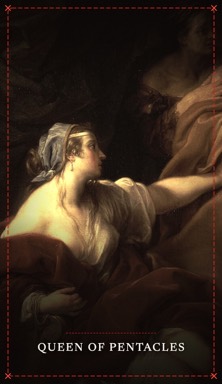 Queen of PentaclesSensuality (Allegory of Lust)Pompeo Batoni, 1747State Hermitage Museum, St PetersburgPublic domain · Wikimedia Commons
-
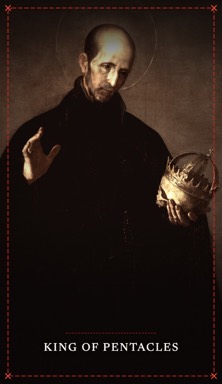 King of PentaclesSaint Francis BorgiaAlonso Cano, 1624Museo de Bellas Artes, SevillePublic domain · Wikimedia Commons


